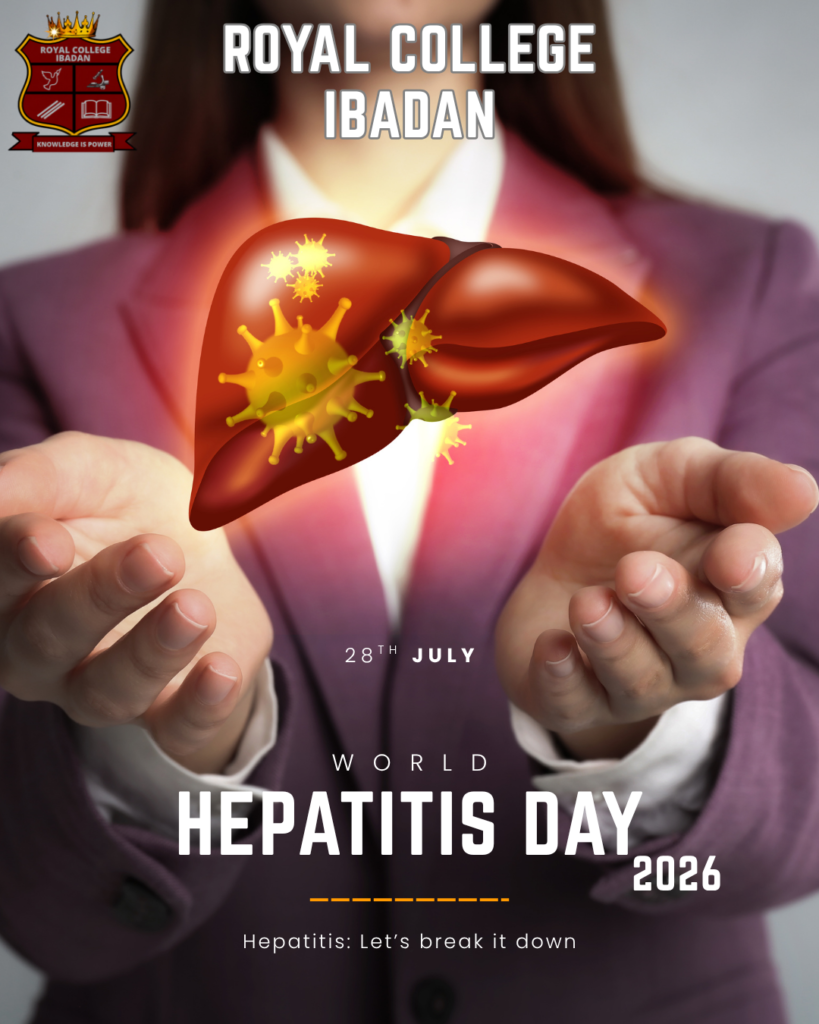
Every year on 28 July, the world marks World Hepatitis Day, led by the World Health Organization. The purpose of this day is to help people understand what hepatitis is, how it affects the body, and what we can all do to prevent and treat it.
What is Hepatitis?
Hepatitis simply means inflammation of the liver. The liver is a very important organ in the body, it helps to clean the blood, digest food, and store energy. When the liver is inflamed or damaged, it cannot work properly.
Hepatitis is usually caused by viruses. The most common types are Hepatitis A, B, C, D, and E. Among these, Hepatitis B and C are the most dangerous because they can lead to long-term illness, liver damage, and even liver cancer.
One major problem with hepatitis is that many people do not know they have it. This is because the disease can stay in the body for years without showing clear symptoms.
The theme for World Hepatitis Day 2026 is “Hepatitis: Let’s break it down.”
This message is about removing the obstacles that stop people from getting help. These obstacles include:
• Not knowing enough about hepatitis
• Fear or shame (stigma) around the disease
• Lack of access to hospitals or testing centres
• High cost or limited availability of treatment
“Breaking it down” means making it easier for everyone to get the care they need.
One important thing to know is that hepatitis is not a hopeless disease. In fact, we already have the tools to fight it:
• Vaccines can prevent Hepatitis B
• Tests can detect the disease early
• Hepatitis C can be cured with proper treatment
• Hepatitis B can be managed with lifelong care
These solutions can save lives and prevent serious complications. However, many people still cannot access them.
Even though solutions exist, hepatitis continues to affect millions of people around the world. This is mainly because:
• People are not aware of the disease
• Many do not go for testing
• Some health systems are not strong enough
• There are inequalities, especially in developing countries
Because of this, many people only find out when the disease has already caused serious damage.
World Hepatitis Day 2026 calls for action. It is about making real changes. This includes:
• Governments investing more in healthcare
• Making testing and treatment available and affordable
• Educating communities about hepatitis
• Reducing stigma so people feel safe to seek help
When these steps are taken, more lives can be saved.
You don’t have to be a doctor to help fight hepatitis. Here are simple steps you can take:
• Get tested if you are unsure of your status
• Ensure children receive recommended vaccines
• Share correct information with others
• Encourage friends and family to seek medical advice
• Support health campaigns in your community
World Hepatitis Day reminds us that hepatitis is preventable, treatable, and in some cases curable. The challenge is not the lack of solutions, but the lack of access and awareness.
The theme “Let’s break it down” is a call to remove every barrier so that no one is left behind.
With the right knowledge and action, we can protect lives and build a healthier future for everyone.