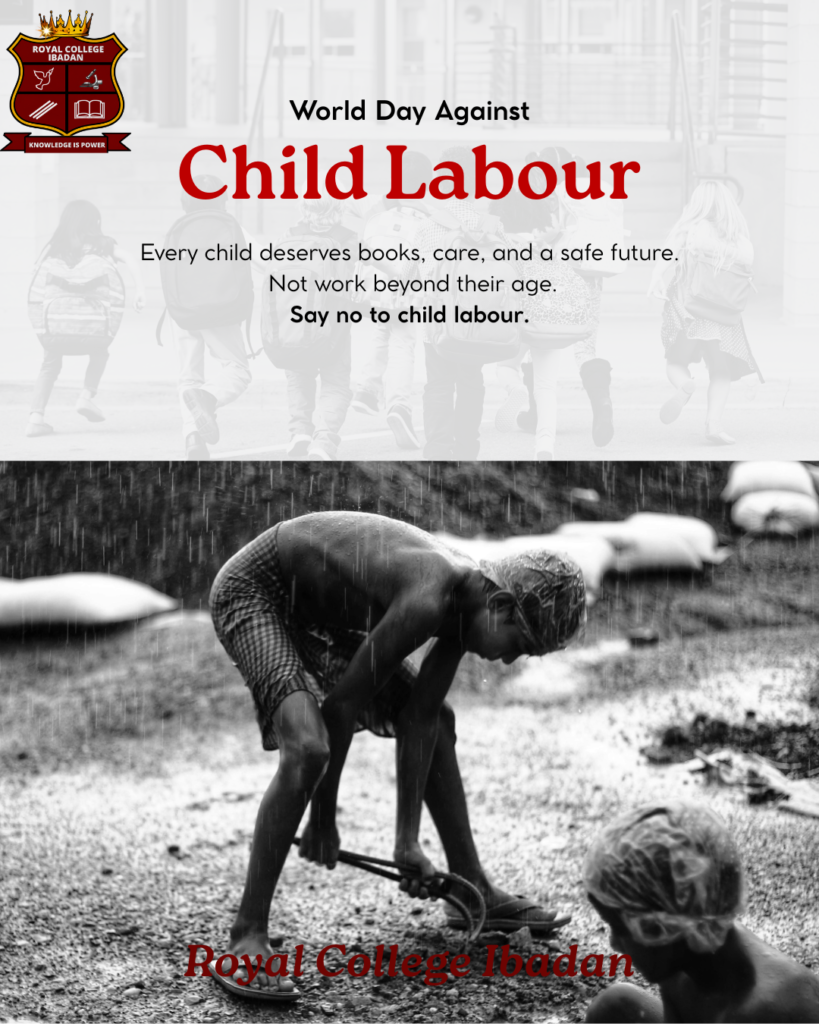
Every child deserves a childhood filled with the joy of being young. Yet, across the world today, millions of children are still trapped in labour and forced into responsibilities that rob them of education, safety, and hope. This is why the World Day Against Child Labour remains a powerful reminder that the future of any society depends on how well it protects its children.
Every year on June 12, this global observance, led by the International Labour Organization, calls attention to the urgent need to eliminate child labour in all its forms. This is about children, with dreams and potential, who deserve the chance to sit in classrooms instead of working in fields, markets, or dangerous environments.
Child labour is often driven by poverty, lack of access to quality education, and social inequality. In many communities, children are forced to contribute to family income, sometimes at the cost of their own development. Despite these challenges, they should never become an excuse for a system that normalizes the exploitation of young lives. Every child kept away from school is a future delayed, a talent untapped, and a society held back.
The theme for this year’s observance is “Red card to child labour: Fair play for children, decent work for adults”. The 2026 World Day Against Child Labour campaign calls for reinforced action on the policies that prevent child labour and withdrawn children from it. These includes; quality education, universal social protection, decent work and adequate livelihoods for adults, stronger laws and enforcement, better data and monitoring systems, and responsible action in agriculture and supply chains. This action is urgently needed. According to statistics, 138 million children remain in child labour worldwide, including nearly 54 million in hazardous work.
However, with the recent events in Oyo state, we are reminded that beyond labour, many children still face threats to their safety and freedom. The disturbing reports of student kidnappings in parts of the state and Nigeria highlight a deeper concern. This means that children are not only at risk of losing their education to labour, but also to insecurity. When a child cannot safely access school, their right to learn is just as compromised.
At Royal College Ibadan, we strongly believe that education is not just a privilege, it is a right and a powerful tool for transformation. We cannot ignore the uncomfortable truth that child labour still exists around us, sometimes hidden in plain sight. And when combined with growing security concerns, the risks facing children become even more complex. But change begins with awareness, and awareness must lead to action. It is not enough to feel concerned, we must be intentional in our efforts to support policies, initiatives, and practices that safeguard children’s rights.
As we mark this important day, let it serve as both a reflection and a call to action. The responsibility belongs to all of us. We must build a society where no child is forced to trade their dreams for survival or live in fear of losing their freedom.
When we protect our children, we are not just shaping their future, we are securing our own.
Remember, on this World Day Against Child Labour, raise the Red card to child labour.